No Meta Glasses: Surveillance Tech is NOT Chic.

Meta Glasses are a form of surveillance technology — full stop. No celebrity endorsement or trend on social media can make surveillance tech chic or acceptable.

Frequently Asked Questions (FAQs)

Meta is betting that if women embrace AI glasses, everyone else will too. These FAQs explain why the Meta is pushing surveillance tech to women, the risks Meta glasses pose to your privacy and safety, and what YOU can do to push back.

#1: What are Meta glasses?
  • Meta glasses (also called Meta AI glasses or Meta “Smart Glasses”) are wearable sunglasses or eyeglasses with built-in cameras, microphones, speakers, and an AI assistant that is activated by voice.
  • Meta glasses are part of a worrying trend toward constant surveillance technology in everyday life. Unlike a phone or camera, Meta glasses make it easier to secretly record and collect information about people in everyday places without their knowledge or meaningful consent.
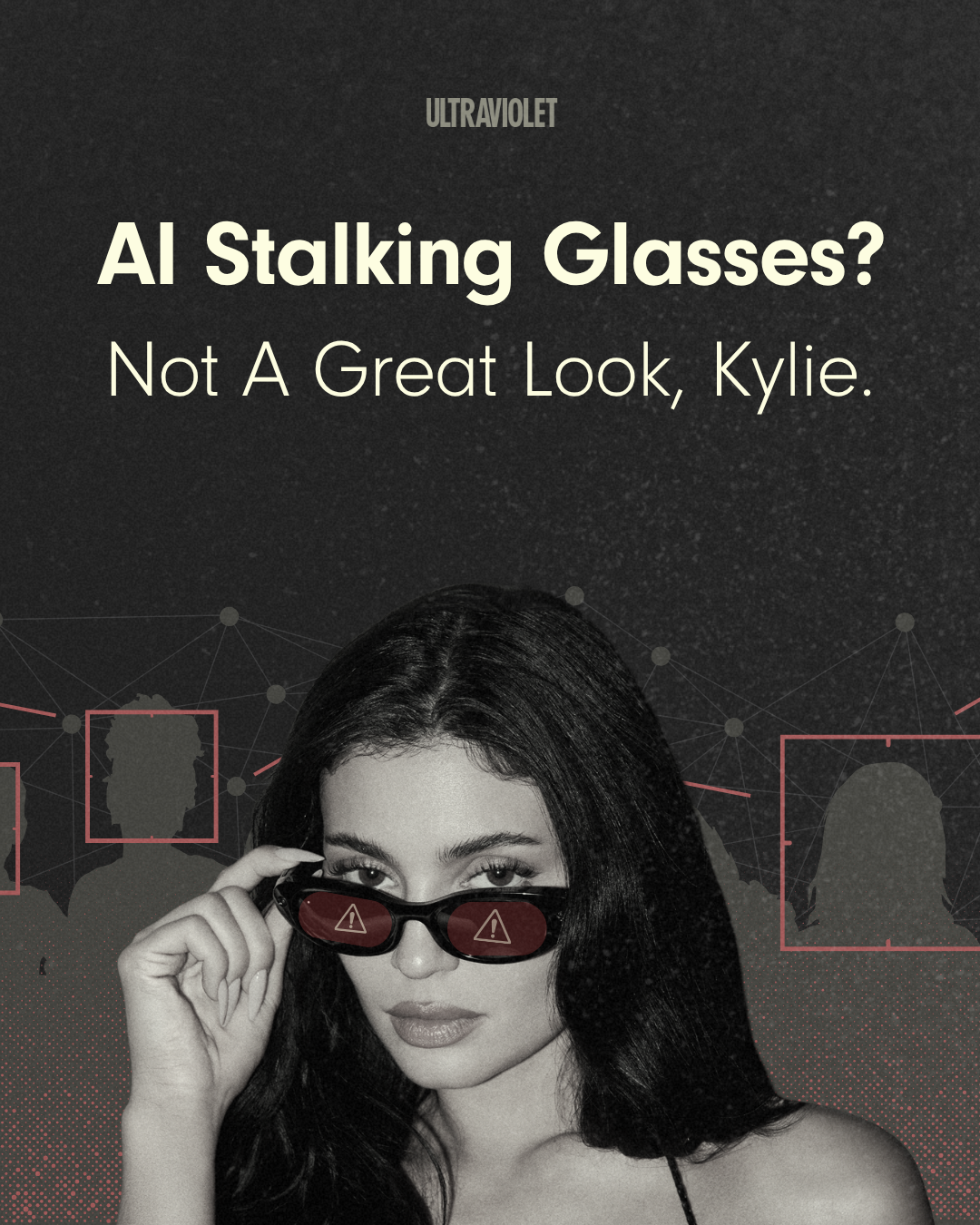
  • In 2026, Meta and EssilorLuxottica launched a new collection of Meta glasses marketed toward women, including a model designed in collaboration with billionaire beauty influencer Kylie Jenner. The company also made Jenner’s “voice” available as an option for the built-in AI assistant.
#2: What's the problem with Meta glasses?
  • Meta glasses make it easier to secretly record people in everyday places without their knowledge or consent. Meta glasses have already been used to publicly harass, stalk, exploit, mock, or intimidate women, girls, LGBTQ+ people, survivors, and other vulnerable communities.
  • These concerns are not hypothetical. Trending videos posted on Instagram and other platforms have shown people, mostly men and boys, using Meta glasses to record women and girls for “pickup” content, prank videos, and other viral content while the women being filmed were often not aware they were being recorded. Many women only learn they were filmed after the videos have been posted online, where they can be shared, downloaded, and preserved indefinitely.
  • The use of Meta glasses to secretly film and harass women has become so widespread that people have begun calling them “pervert glasses.
  • In July 2026, Instagram (owned by Meta) announced it would begin removing videos filmed with Meta glasses that harass or exploit people. Similar videos have also appeared on YouTube and other platforms. If you see videos on social media that use Meta glasses to secretly film, harass, or exploit people, report them immediately on the platform where they were posted.
  • Meta glasses are also part of a growing and troubling trend that normalizes the idea that people should accept being filmed and surveilled simply for existing in public. Similar to the public backlash to Ring doorbell cameras and Flock license plate readers, Meta glasses bring constant surveillance into everyday interactions, making it easier for people to watch, record, and track others without their knowledge or consent.
#3: Why is Meta marketing Meta glasses to women?
  • The tech industry is well aware that women are more hesitant to use AI. One recent study of nearly 3,000 people in the United States and Canada found that women were about 11% more likely than men to believe AI’s risks outweigh its benefits. The researchers also found that women were more likely to believe they will personally bear the risks of AI.
  • Meta knows it needs women to embrace AI if it wants products like Meta glasses to become part of everyday life. That’s why Meta tapped billionaire beauty influencer Kylie Jenner to promote its AI-powered smart glasses to her hundreds of millions of followers. The goal is to make AI-powered surveillance tech feel fashionable and appealing.
  • Instead of asking why so many women feel unsafe, exploited, or alienated by AI and other technologies already shaping our lives, Meta and other tech companies tell us we have to embrace AI or risk being left behind. UltraViolet calls this strategy “forced AI inevitability.” The reality is that AI companies need women as customers more than women need AI, so they’re investing billions of dollars to sell women on AI instead of addressing the harms their products enable.
  • Meta’s Kylie Jenner campaign is a clear example: instead of addressing women’s privacy and safety concerns about surveillance tech, the company is using celebrity marketing to make the technology seem more appealing to the women most likely to be affected and harmed by it.
  • Meta Glasses are a form of surveillance technology — full stop. No celebrity endorsement or trend on social media can make surveillance tech chic or acceptable.
#4: What is the Meta Glasses "NameTag" feature?
  • Meta is pursuing adding facial recognition technology to its Meta glasses, called “NameTag.” The feature was first reported by The New York Times in February 2026. A few months later, WIRED reported that Meta had allegedly embedded inactive “NameTag” face-recognition code into the Meta app before removing it after the reporting became public.
  • If added to Meta glasses, “NameTag” could make it possible to identify strangers in real time, making it easier to track, stalk, or profile people in everyday public spaces.
  • UltraViolet is calling on Meta to permanently abandon any plans to add facial recognition to its AI glasses. Meta Glasses are already a serious threat to women’s privacy, but adding facial recognition would make them even more dangerous by allowing people wearing the glasses to instantly identify strangers in public.
  • Meta Glasses facial recognition like “NameTag” would make it easier for stalkers, abusers, harassers, and others to identify, track, stalk, or dox people in everyday spaces — putting women, children, LGBTQ+ people, and survivors at even greater risk.
#5: What kinds of abuse does Meta Glasses enable?
  • Meta glasses have already been used to secretly film and harass women and girls without their knowledge or consent.
  • Surveillance tech like Meta glasses also makes public life less enjoyable.
    People are less likely to show spontaneous emotion, dance at music festivals, have conversations with friends, or simply be themselves.
  • If Meta adds facial recognition like “Nametag”, the surveillance tech could make these harms even worse. Real-world examples include:
    • 1) A stalker identifies someone at a coffee shop, follows them home, and uses facial recognition to instantly learn their name and private information.
    • 2) An abusive ex-partartner spots a survivor in public and uses the glasses to identify where they live, work, and spend time.
    • 3) A person entering a reproductive health clinic or a gynecologist’s office is secretly recorded, identified, and linked to that location without their consent.
    • 4) Someone attending a domestic violence shelter, LGBTQ+ community center, or religious service is identified and tracked over time.
    • 5) Children at a playground or school event are secretly recorded and identified without their parents’ knowledge or consent.
    • 6) A person’s image is captured without their consent and used to create or distribute non-consensual intimate images (sometimes referred to as “revenge porn”) or image-based sexual abuse like AI-generated sexual deepfakes.
#6: What can I do to stop Meta glasses?

Meta is counting on people accepting AI-powered surveillance tech as a normal part of everyday life. But public pressure has changed companies’ behavior before, and it can again.

  • 1) Sign UltraViolet’s petition calling on Meta and EssilorLuxottica to permanently abandon facial recognition technology (aka NameTag) in all Meta glasses.
  • 2) Speak up when you see brands market surveillance tech to women as fashionable, inevitable, or empowering without addressing the real harms caused to women and marginalized communities. If you see a Meta glasses ad or paid partnership with a content creator, call this concern out in the comments so others are also empowered to push back against the normalization of surveillance tech.
  • 3) Ask your favorite businesses and venues to ban Meta glasses on their property. Private businesses including bars, restaurants, music festivals, gyms, theaters, and other places can choose to ban surveillance tech for the privacy and safety of their customers. Banning Meta glasses from events and businesses isn’t unprecedented. Recently, DEF CON, a cybersecurity conference, has banned Meta glasses and all similar brands. Monopoly Events—the organizer behind several major Comic-Con events—has also banned Meta glasses and other wearable recording devices. If enough customers ask, more businesses can do the same and create spaces where people don’t have to worry about being secretly recorded.
  • 4) If you see videos on social media that use Meta glasses to secretly film, harass, or exploit people, report them immediately on the platform where they were posted.

TAKE ACTION

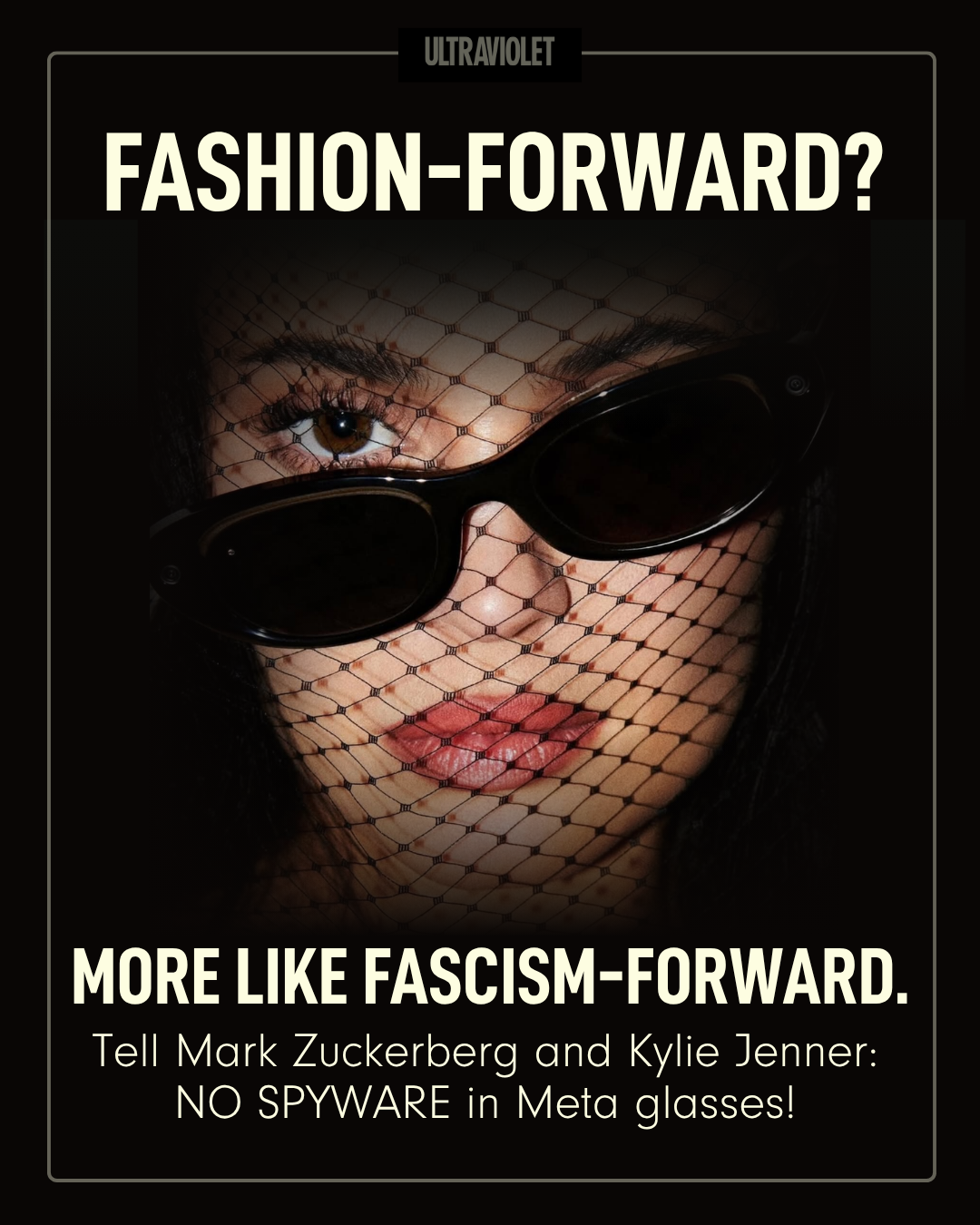
Tell Mark Zuckerberg and Kylie Jenner: NO SPYWARE in Meta glasses!

Tell Mark Zuckerberg and Kylie Jenner: NO SPYWARE in Meta glasses!

Meta glasses already threaten women's privacy and safety. Facial recognition technology would make them even more dangerous! Sign UltraViolet's petition calling on Meta to reject spyware in smart glasses.

Sign the Petition

SHARE ON SOCIAL MEDIA

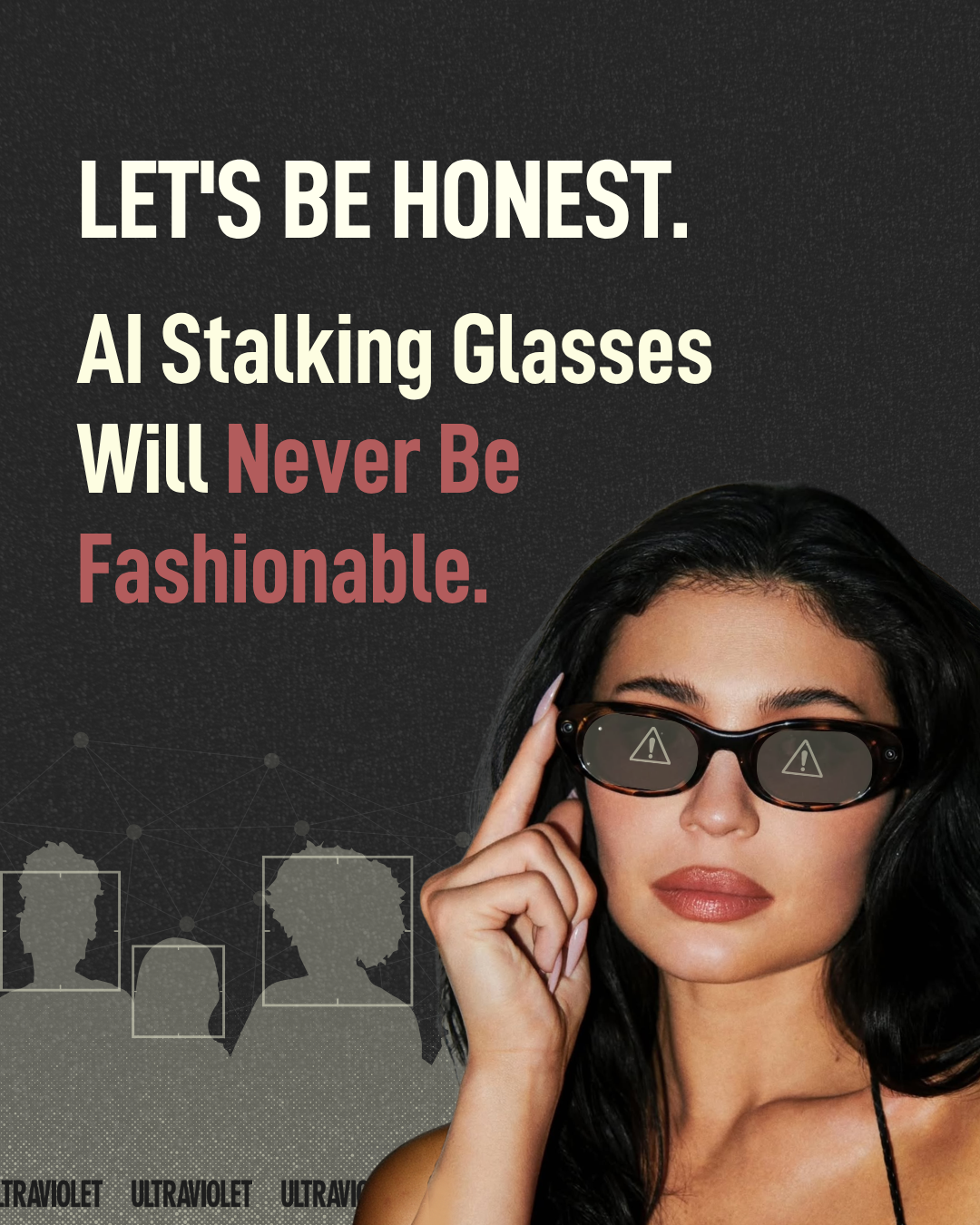
Download these graphics or explore the social toolkit for ready-to-use social media content. Then share them with friends, family, and your community. Every share helps push back against the normalization of AI-powered surveillance technology.


Meta Glasses Graphic 1

Meta Glasses Graphic 2

Meta Glasses Graphic 3
Download PNG Download PNG Download PNG

For press inquiries or interview requests, please contact: media@fwdshift.com

For general questions, partnerships, or organizing inquiries, use the contact form below.

Contact Us

Act Now Megaphone

Close

Donate